Dauphin A Music Blog/Zine About Edinburgh's Local Bands and Artists.
Dauphin was a music blog/zine focusing on Edinburgh's local bands and artists.
Content is from the site's 2010 -2012 archived pages providing a small glimpse of what this site offered its readership.
Dauphin Magazine is a music blog and digital magazine focused on promoting and reviewing local signed and unsigned acts in Edinburgh.
I try and champion as many of the brilliant musicians in the city as possible, though sometimes I look at artists from further afield. You can follow me on Twitter here and if you know a band that deserves a mention – or you’re in a band, send me an email at [email protected]. Sometimes I publish other writers’ stuff too.
About the rating system; at the bottom of reviews, you’ll see the Dauphin logo, cropped horizontally. If a band fills up letters in the logo that’s what it’s score is (so three stars might equate to DAU, whilst seven would be the whole word).
If you fancy writing anything for the site – I’m always looking for more material – then send me an email.
Like this:
Be the first to like this
~~~~~
"I loved the year I spent abroad studying at the University of Edinburgh in 2011. The teaching methods there were a combination of lectures and tutorials/seminars with smaller groups of people. Although I am now living in NYC I still keep in touch with a number of people whom I met there. One thing we all shared while at the University of Edinburgh was our love of music. We would go to as many festivals as possible. Scotland music festivals provided us with a cultural treat, from traditional Celtic music to classical and pop music, in a variety of venues. To keep on top of the local music scene I would check out the posts on Dauphin. I can't begin to count the number of dives We would go to to listen to some obscure band Dauphin would mention. Some were really great. I often wonder what has happened to them." Missy Donnell
~~~~~
"I really enjoyed exploring Dauphinmag.com; it opened up a whole new world of music to me, introducing me to bands I would never have stumbled upon otherwise. It's truly remarkable how they feature artists from across the globe. I'm always fascinated by the distinct sound differences between American and European bands. While at times the distinctions blur, the cultural influences on their music are evident and deeply appealing to me. Participating in the magazine's contest to rename the band Squeeky Cleen was something I did on a whim. Being a big Batman fan, the prizes were too tempting to resist—the winner had their pick of any Batman sweatshirt from MoonAtMidnight.com. To my surprise, I won first place with my submission, "Dead Sea Squirrels," chosen by the band members themselves. That brief moment of fame was thrilling, and I cherish it every time I wear the sweatshirt. It feels like my lucky Batman sweatshirt, a keepsake I'll hold dear indefinitely. I can't recommend this magazine enough to music enthusiasts looking to broaden their horizons. It's a treasure trove for those eager to explore beyond their usual playlists." Jasper Ri
~~~~~
POSTS
Jul 18 2012
Lucky Dip #3

I hope you’re feeling lucky – because we’re up to our third instalment of the Lucky Dip feature.
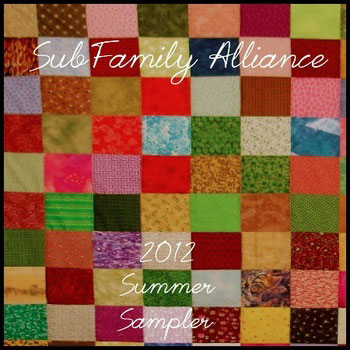
The SubFamily Alliance Summer Sampler is a ten track compilation album. Someone from America, a member of this collective, emailed me about this record they’ve released with bands from that area – it’s free from their Bandcamp page. I have also embedded the first track below.
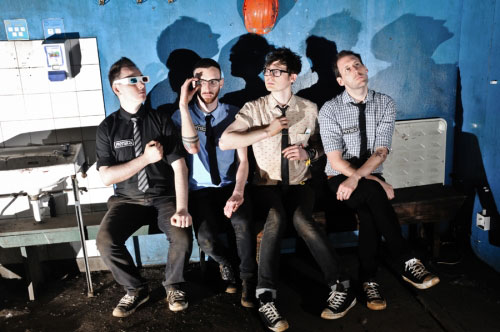
Glasgow indie rockers We Are The Physics have released a new single in anticipation of their forthcoming second album. They describe themselves as ‘science punks’ – I don’t know why. I don’t think they’re scientists. Either way, because SoundCloud messes up the site, I won’t embed to the track – but a link to Applied Robotics (the name of the song) is here.
The Winter Tradition, whose last single I reviewed here, release their debut album tomorrow. There’s a launch show on at Cabaret Voltaire on that night, too. You can buy the album from their site here. Their form of indie rock has been gaining plaudits in all sorts of places, as have their Glaswegian contemporaries Fatherson, so the album should make quite the splash.
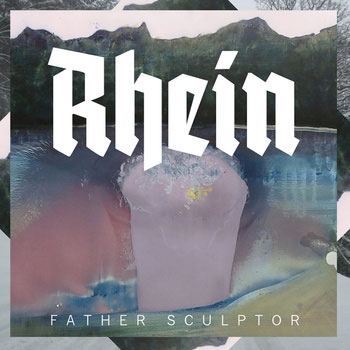
Father Sculptor are releasing a new song every fortnight this summer. One of these songs is Rhein, which I’ve embedded below and which you can download for free. Their sound is a nice fusion of jangle pop and minimalistic guitarmanship; a very interesting listen.
Sorry, this track or album is not available.
Song of the Day #70
It’s our seventieth Song of the Day. Today’s track is Anti Lover by Satellite Stories. They’re Finnish! Every band member is blonde! It’s sung in multiple languages!
Jul 11 2012
Song of the Day #69
I’m going to make today’s Song of the Day a double fixture. First up, we have The Pictish Trail’s new song Michael Rocket. The second track I’ve picked up is the new single from Bloc Party, Octopus. Have fun!
Jul 09 2012
Releases, Reviews
Something for the Weakened
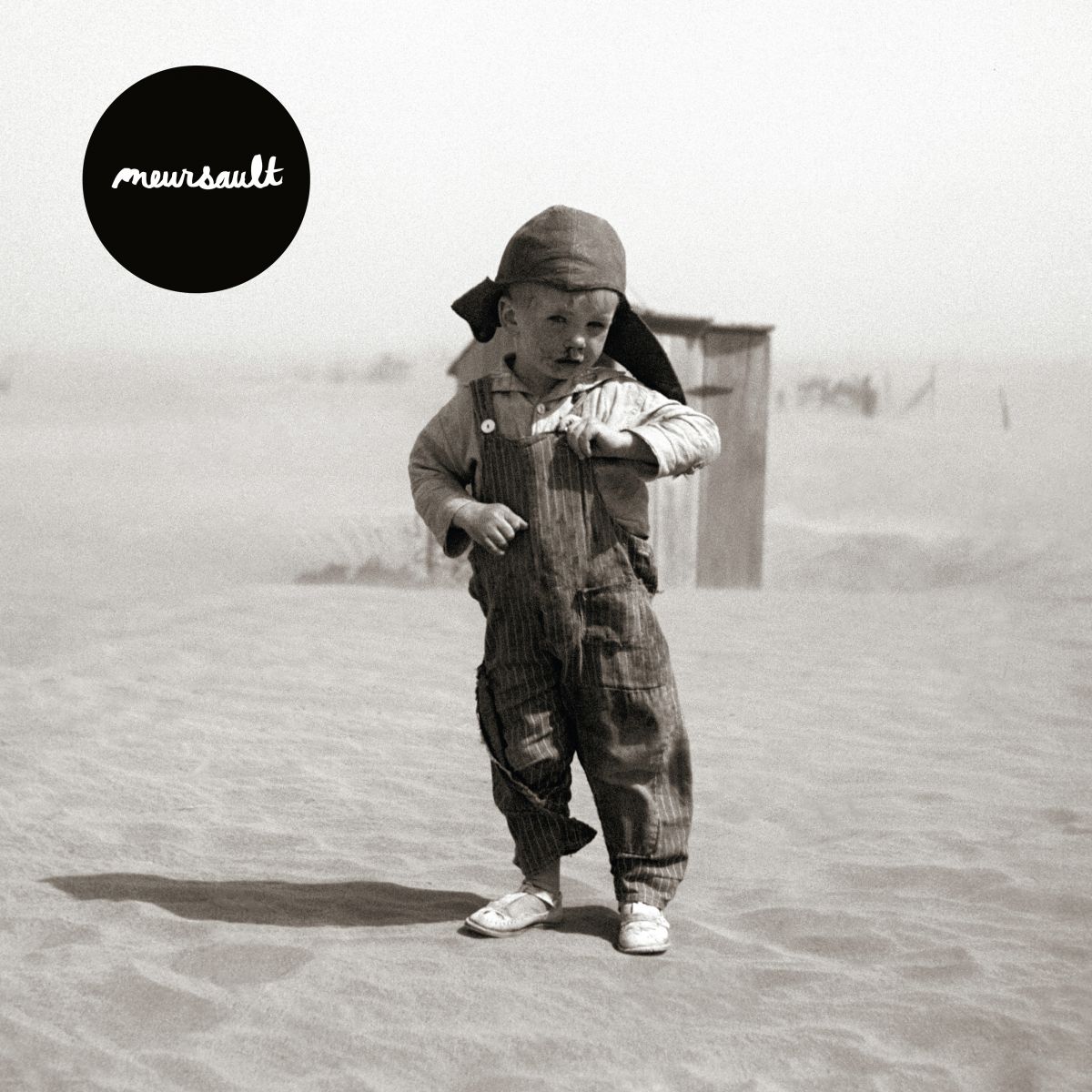
One of Edinburgh’s finest acts release their new album in seven days time. Something for the Weakened, Meursault’s third album, is out on the 16th of July on Song, By Toad Records. To read my full review, click the “Continue Reading” button below.
Dauphin needs you!

Hello, readers. I need your assistance. Throughout the Festival Fringe, I’ll be writing reviews for one of the Fringe magazines. I plan on reposting each review of a live act onto Dauphin from their website, and during this time the site will be in full-Fringe mode.
I’m not just going to use the site for dumping reviews on. I want to use Dauphin to show where and when every band in Edinburgh is playing – a collated listings, I suppose. I’ve begun emailing the bands I know are active in Edinburgh, but as always, there are many acts I haven’t come into contact with or whose email addresses I don’t have.
This is where you come in: if you play in a band, or represent an act that will be playing in Edinburgh in August, I need to hear from you.
When I have enough data, I’ll post the listings online in a sticky post using Google Fusion; there’ll be a special masthead for the period too, for those people that get excited about fonts.
To be included in the Dauphin Fringe Listings, please tell me the name of the band, where they are playing, and when – this is best delivered via email
Battery Face
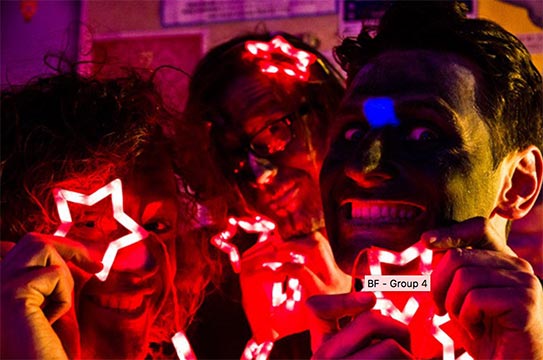
Battery Face are a three-piece rock band from Glasgow, who are releasing their debut album, Addams Family Values, at the end of the month. The album is being released jointly by DIY labels Dirty Beard and Electropapknit. Recently, they supported Jesus H. Foxx at their album launch. On the back of their new album, however, they deserve a closer look.
Jun 28 2012
Song of the Day #68
Today’s Song of the Day is These Butterflies Are Here by A Dark Horse. It’s a really gorgeous video that uses stop-motion photography, a really cool house and some lovely music.
According to the band, it is “based on the idea of how we change our lives in the unknown, as the symbology of our past and futures meet to do battle – it’s in this plain that all our hopes, fears & dreams are made.”
I’d be quite put out if I came home one day and found that my flatmates had dumped leaves in all the rooms, though.
Jun 24 2012
Releases, Reviews
Birdhead
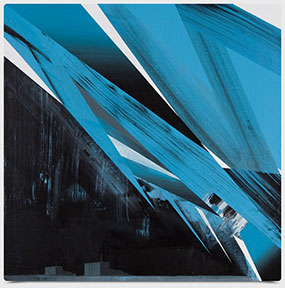
I’ve been listening to a varied selection over the last few days – for instance, the BBC’s dramatisation of Ulysses; the frantic, scared chirps of a pair of blackbirds, who having nested in a hedge in the back garden, were distressed to discover my cat waiting patiently outside their little home. I’ve also been listening to Birdhead’s new single, out on Gamma Proforma tomorrow.
June 10, 2011
Interviews
Interview: Black International
An interview from a couple of weeks ago with Black International.
How did the act form & how long have you been playing on the Edinburgh scene?
Craig and I started the band way back in 2006 to play some songs I’d written in my bedroom; we booked our first show at the Wee Red Bar in October that year and things started moving from there. We’ve had our share of bad luck which meant we lost some of our initial momentum a couple of years in; bass players coming and going, personal injuries and illnesses… we had quite a run of negative occurrences for a while! The current lineup has been in place since the start of 2010 when Gavin joined, and we’ve made a lot of progress since then. Things feel a lot more stable now, it’s nice to feel like the whole thing isn’t going to fracture at any moment.
Who are the best bands on the local scene – the ones you go and see, the ones you’d actually buy CDs from?
Recently I’ve enjoyed seeing the Young Spooks, Snide Rhythms, Jackie Treehorn, Muscletusk… anything with a bit of spunk or imagination. We can all get bored quite easily at gigs, it’s nice when something out of the ordinary grabs your attention.
What’s your favourite venue for playing in, and what’s your favourite venue for watching a gig in?
Our favourite venue for both is probably the Wee Red Bar, we’ve played there over half a dozen times since that first gig. The staff are lovely, there’s never any hassle, you can book the venue for free on a Friday, the PA system is decent… the list goes on. If Edinburgh University decide to shut it down based on the recommendations of some accountants, we and many other groups will be absolutely gutted; the place has a cultural significance that can’t be quantified by a guy in a suit, and it would be disastrous for local bands if it closed.
Where/when (and why) was the best gig you’ve played in Edinburgh?
Our second ever gig was at a night called Dfrnt Drum at Cabaret Voltaire and was particularly crazy for some reason, it definitely sticks in my mind. We played on the floor at about 2:30am to people who’d never heard us before and were really getting into it. Plus we got paid, were given free beer and the use of a dressing room; it completely spoiled us very early on.
If your act was an animal, Pokemon, mythical creature or superhero – which one would it be?
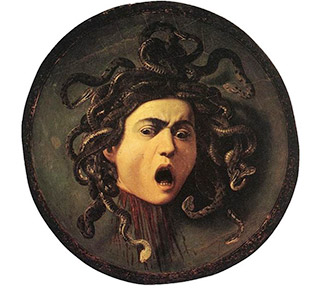
If we’re talking mythical creatures, then probably Medusa, as she’s a bit sexy, a bit ugly and a bit dangerous all at the same time. I’m referring to the music, obviously, not us personally. We’re just straight up sexy without the other bits.
October 23, 2010
Song of the Day #18
Today’s Song of the Day is Straight Towards The Sun by Newton Faulkner, from his debut album Handmade By Robots. The change in video is because I don’t want to embed crappy videos with just some still artwork and bad sound quality from somebody else’s YouTube account. Basically, I’ll now be using this sunny autumn shot of George Square and just throwing some music behind it, so you guys can listen and carry on with what you’re doing, or look at something nice, without feeling obliged to watch the official video or suffer horrific audio quality. The videos are on our new YouTube channel here.
October 20, 2010
Song of the Day #17
Today’s Song of the Day is Romeo & Juliet by Dire Straits. If you’re feeling talkative, why not post your own suggestions of songs influenced by Shakespeare? That awful country-western track by Taylor Swift doesn’t count, by the way….
October 19, 2010
Song of the Day #16
Today’s Song of the Day is Hooting & Howling by Wild Beasts.
October 18, 2010
eagleowl @ Roxy Art House
Tonight, eagleowl are headlining a five-band setup in aid of the Pakistan Flood Relief campaign at Roxy Art House, that crumbling, tumbledown venue tucked away in the shadows of the Old Town. They’re joined byIliop, The Douglas Firs, Alistair Roberts and The Wee Rogue, and once again the little basement room is packed to the brim.
First on is Iliop – the alias for one-man experimental electronic act Pete McConville who, at first sounding nervous and lonely on stage, thaws the audience into rapture. His music is evocative and weird, and conjurs abstract images like those of motorways where the cars are nought but streams of light; it’s not long before you’re lost in the siren-song of the ghostly audio he’s beaming out into the room. McConville never stops moving – setting up the next loop to come in at the right moment or fiddling with the wires laid around his feet; the detritus of soundchecks – guitar cables, pint glasses and instrument cases. It’s a crowded stage for one man, but he manages to make the air vibrate with some sort of cosmic, digital energy.
Moving on, the Douglas Firs step up and make their mark on the night. I’ve seen them before and every time I listen to them, they grow on me. Tonight they’re like a sudden July storm that’s been brewing for days and then the lightening is upon you with three guitars each throwing thunderclap punches; each new track washes over your mind like a crashing wave on the beach and you’re caught in its chaos theory curl. They play a couple of songs from ethereal The Haunting EP and a few others, and then they are gone – as sudden as the first explosive chords, they fade and their beautiful haunting power has passed; skies are clear for the next act.
The Wee Rogue – or Jamie, as he introduces himself – slithers onto stage like he doesn’t want to be seen by the crowd but what appears to be initial unconfidence soon becomes an asset. His songs are heartfelt and delicate and sparing; the lyrics more alike to slam poetry than a folk ballad, and his cute Scots tilt adds another flavour to the well-crafted, bespoke songs he threads with his modest acoustic guitar melodies. Neither poppy nor new-folk, Jamie O’Connor is indeed a little rogue – he sings with a silken intimacy, careful longhand in his songs reveal a subtle magic, and the listener is enchanted.
Alistair Roberts, the near-mythical folk man from Glasgow, appears with a wonderfully worn guitar and a set of vintage-valued songs. Based heavily on traditional ballads, the tragic rough vocals and his woven earthy guitar make his short set a one to remember; patchwork iconography and woollen aural aesthetics are the mode du jour. And finally, to round off the night, eagleowl “headlining by default” are on stage with their own small set. They’re currently catching alight in terms of press attention, garnering support from The Scotsman and The Skinny, have released a few singles. This two-piece cello and guitar band is on its way up in the world. Think Sparklehorse or The Miserable Rich and while they’re mostly similar at face value to The xx, (albeit clearly detached from the r n’b influences) they’re wonderfully distinct from anything you’ll have heard; at the same time slotting perfectly into anti-folk indie canon but retaining a pure, unique voice of its own.
Nevertheless, their sound is undeniably, almost uncomfortably confidential; when lead vocalist Bart sings in his hushed, shadowy manner it’s almost as if they’re opening a door on some innermost secret. Their lyrics are entwined with raw emotion and feeling like a vine growing up the side of an old house, rooted right into the mortar and brick. Put simply, they sound beautiful, absolutely beautiful. It’s private and gorgeous and crystalline and you don’t want them to stop playing when they are finished.
Rating: Iliop DDD, Douglas Firs DDDDD, The Wee Rogue DDDD, Alistair Roberts DDDD, eagleowl DDDD
October 13, 2010
Strawberry Ocean Sea

Strawberry Ocean Sea are a alternative act in the mould of mountain-dwelling indie kids Woods or the euphoric Aussie band The Temper Trap. Formed from the remnants of a previous, similarly hotly tipped band called The Apple Scruffs, they’re from Glasgow (but are playing Wee Red Bar soon, so they get a mention), have recently been featured in The Sun’s Ones To Watch section (they scanned the article and uploaded it here), and were recently endorsed by Glasvegas frontman James Allan. Oh, and the band name was part-inspired by a dream, part-inspired by a Paul McCartney album – like all good things in life.
The opening riff to Enough is Enough could be mistaken for a Pigeon Detectives intro, but it comfortably moves into territory occupied by more experimental groups – although lead singer Jonny Skinner’s vocals are very much in the style of Dougy Moudagi (Temper Trap) or a young Bono, they’ll also remind you of Beach House‘s Victoria Legrand – especially on the less guitar driven tracks like Do It. Although unsigned, their demos on their MySpace page are pretty decently recorded – and if anything, the rough-hewn, DIY sound quality brings out the banshee in Skinner’s voice – giving the band a certain waif-like quality that sets them apart from other guitar-indie bands on the circuit. For an unsigned band their sound is remarkably fully-formed – give ‘em a listen.
Rating: DDD

More Background On DauphinMag.com
DauphinMag.com emerged in the late 2000s as a grassroots digital publication dedicated to documenting and promoting independent music, with a particular emphasis on Edinburgh’s vibrant local scene. At a time when traditional music journalism was increasingly centralized around major labels, large festivals, and commercial trends, Dauphin positioned itself deliberately at the opposite end of the spectrum. Its core mission was to champion unsigned and emerging artists, especially those operating within small venues, DIY networks, and community-driven performance spaces.
Unlike many music blogs that attempted to balance underground credibility with mainstream visibility, Dauphin embraced its role as a niche publication. The site focused on discovery rather than hype, treating local music culture as something worthy of careful observation and thoughtful commentary rather than mere promotion. This ethos placed Dauphin squarely within a broader tradition of British music zines, albeit adapted for the digital age.
The publication’s editorial voice was personal, articulate, and opinionated, reflecting the perspective of an engaged participant in the local scene rather than a detached critic. This approach helped Dauphin develop trust with both readers and musicians, many of whom viewed the site as a genuine supporter rather than an opportunistic tastemaker.
Editorial Vision and Ownership
DauphinMag.com was independently run and editorially controlled, with no corporate ownership, institutional backing, or commercial publisher behind it. This independence shaped every aspect of the site, from its content choices to its tone and frequency of publication. The editor openly invited submissions from other writers, encouraged direct communication from bands, and frequently explained editorial practices to readers.
Rather than presenting itself as a polished, professional magazine in the traditional sense, Dauphin functioned more like a curated notebook of the local music ecosystem. Reviews, interviews, and features were written with a strong sense of authorial presence, often contextualizing music within personal experiences of gigs, festivals, and student life in Edinburgh.
This transparency fostered a collaborative relationship with its audience. Readers were not passive consumers of content but active contributors—attending shows based on recommendations, submitting tips, entering competitions, and occasionally writing pieces themselves.
Geographic Focus and Relationship to Edinburgh
Edinburgh played a central role in Dauphin’s identity. The site did not merely report on music happening in the city; it treated Edinburgh as an active character within its narrative. Venues, neighborhoods, universities, and temporary festival spaces were woven into coverage in a way that reflected how music actually functioned in the city’s social fabric.
The publication paid particular attention to venues that served as incubators for new talent, including small bars, university spaces, and underground rooms that rarely appeared in national music press. By repeatedly covering gigs at these locations, Dauphin documented a network of cultural infrastructure that often goes unnoticed in retrospective histories of music scenes.
Edinburgh’s role as a festival city also influenced Dauphin’s editorial focus. During periods such as the Edinburgh Festival Fringe, the site shifted into an intensified mode of coverage, tracking performances, promoting listings, and highlighting the sheer density of musical activity occurring across the city. This responsiveness to the city’s seasonal rhythms distinguished Dauphin from static blog formats.
Content Structure and Key Features
DauphinMag.com offered a range of recurring content formats that together formed a comprehensive portrait of contemporary independent music culture.
Reviews and Releases
Album and single reviews were among the site’s most consistent features. These reviews were notable for their descriptive richness and literary style, often situating music within evocative imagery or narrative frameworks rather than relying on genre shorthand alone. The writing emphasized mood, texture, and emotional resonance, making the reviews accessible even to readers unfamiliar with technical musical terminology.
Importantly, Dauphin reviewed both signed and unsigned acts without privileging label status. This editorial parity reinforced the site’s underlying philosophy that artistic merit was not dependent on industry validation.
Song of the Day
The “Song of the Day” series functioned as a curated listening diary, drawing connections between contemporary releases, classic tracks, and unexpected influences. These posts were brief but thoughtful, often contextualizing a song within broader cultural or personal associations. The format encouraged habitual readership, as visitors could return daily to encounter something new without committing to a full-length article.
Interviews
Interviews on Dauphin were conversational rather than promotional. Questions frequently addressed practical realities of being a musician—venue relationships, lineup instability, financial challenges, and local support systems—rather than focusing solely on upcoming releases. This grounded approach offered readers insight into the lived experience of participating in the independent music economy.
The interviews also served as informal historical records, capturing candid reflections from artists at specific moments in their careers, many of whom later moved on, disbanded, or evolved into different projects.
Live Gig Coverage
Live reviews were among Dauphin’s most detailed and expressive writing. These pieces often described entire multi-band lineups, venue atmospheres, and audience dynamics, providing a sense of what it felt like to be present rather than simply summarizing performances.
Such coverage preserved ephemeral events that would otherwise leave little trace, contributing to Dauphin’s long-term value as an archival resource.
Innovative Rating System
One of Dauphin’s distinctive features was its unconventional rating system, which replaced numerical or star-based scores with a visual representation based on the publication’s name. Portions of the “Dauphin” logo were filled in to indicate a score, with more letters representing stronger evaluations.
This playful system aligned with the site’s broader aesthetic—eschewing rigid metrics in favor of expressive, informal judgment. It also subtly discouraged reductive comparisons between artists, reinforcing the idea that reviews were subjective reflections rather than definitive rankings.
Audience and Readership
Dauphin’s audience consisted primarily of students, young professionals, musicians, and dedicated music enthusiasts, many of whom were either living in Edinburgh or had strong ties to the city. The site also attracted international readers, particularly former students and visitors seeking to stay connected to Edinburgh’s cultural life from afar.
The readership valued discovery and authenticity over trend-following. Many readers used Dauphin as a guide for deciding which gigs to attend, which local bands to explore, and which releases to seek out on platforms like Bandcamp.
Testimonials and anecdotal accounts suggest that Dauphin directly influenced listening habits and social activity, encouraging readers to explore unfamiliar venues and genres.
Cultural and Social Significance
Beyond its role as a music blog, DauphinMag.com functioned as a cultural document of a specific time and place. Its archives capture the texture of Edinburgh’s independent music scene during the early 2010s, including bands that never achieved mainstream recognition but nonetheless contributed meaningfully to the city’s creative life.
In this sense, Dauphin resembles earlier generations of print zines that later became invaluable historical sources. The site preserved voices, scenes, and moments that would otherwise be lost to the transient nature of live performance and online platforms.
Dauphin also demonstrated how individual curators could shape cultural memory through consistent, thoughtful documentation. Without institutional backing or long-term planning, the site nonetheless produced an enduring record simply by paying close attention and writing with care.
Press, Recognition, and Influence
While Dauphin did not pursue mainstream press recognition, its influence was felt within the local ecosystem. Bands frequently referenced coverage on the site, and venues benefited indirectly from increased attendance driven by its recommendations.
The publication also interacted with other cultural outlets, festivals, and community initiatives, positioning itself as part of a broader network rather than a standalone authority. This collaborative posture enhanced its credibility and reinforced its grassroots identity.
Decline, Archival Status, and Legacy
Like many independent blogs of its era, DauphinMag.com eventually ceased regular updates. Shifts in social media usage, changes in personal circumstances, and the increasing dominance of platform-based discovery all contributed to the site’s quiet dormancy.
However, the site’s archived pages remain accessible through web archives, allowing new readers to explore its content years after publication. This archival afterlife has given Dauphin renewed relevance, particularly for researchers, writers, and fans interested in the history of local music scenes.
The longevity of its archive underscores the importance of independent digital publishing as a form of cultural preservation.
DauphinMag.com stands as a compelling example of what dedicated, independent cultural writing can achieve. Through thoughtful reviews, expressive live coverage, and an unwavering commitment to local music, the site documented a rich creative ecosystem that might otherwise have faded without trace.
Its legacy lies not in traffic metrics or commercial success, but in the depth of its engagement and the authenticity of its voice. For readers seeking to understand how music scenes function at the ground level—through friendships, venues, late nights, and shared enthusiasm—DauphinMag.com remains an invaluable resource.